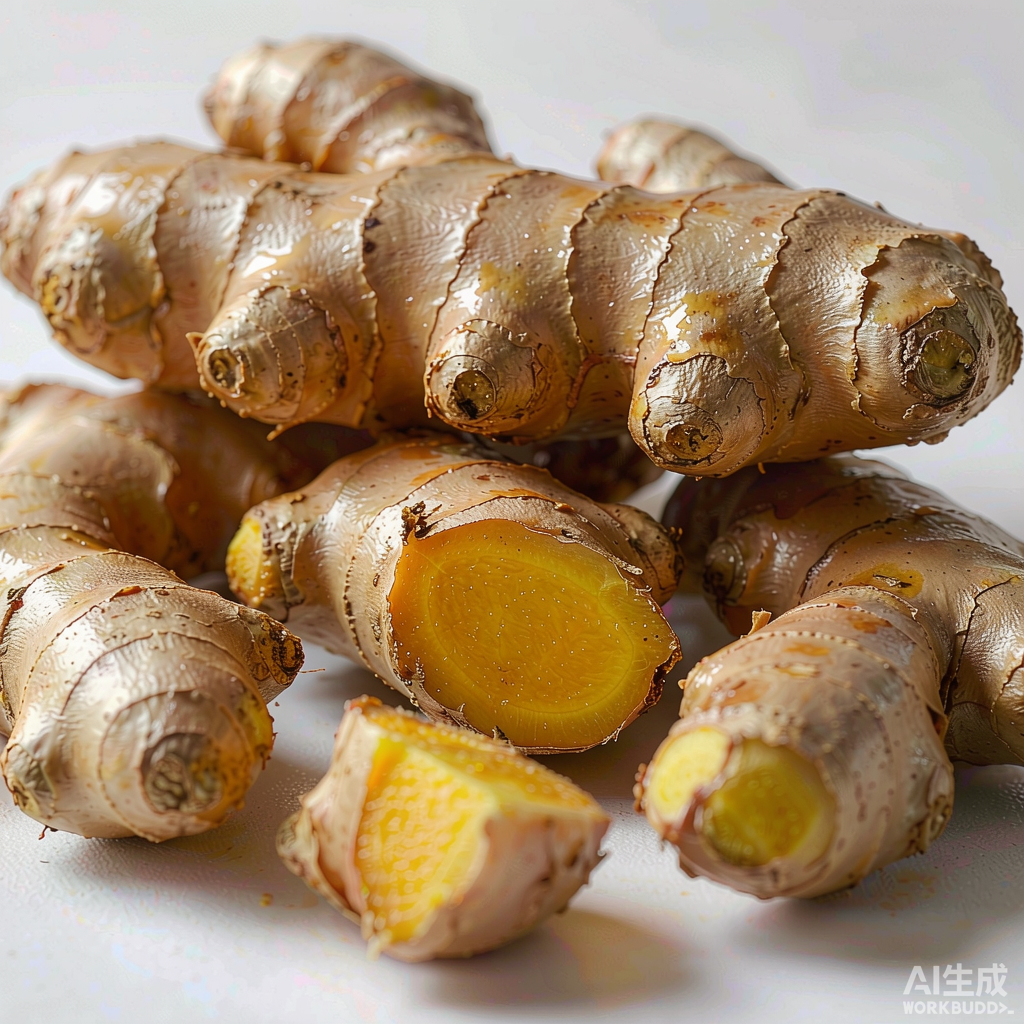
Ginger (生姜 shēng-jiāng)
Properties & meridians: Pungent (辛 xīn), mildly warm. Enters the Lungs (肺 fèi), Spleen (脾 pí), and Stomach (胃 wèi) meridians.
Good for pattern: Wind-Cold invading the Lungs
Properties & meridians: Pungent (辛 xīn), mildly warm. Enters the Lungs (肺 fèi), Spleen (脾 pí), and Stomach (胃 wèi) meridians.
Good for pattern: Wind-Cold invading the Lungs
Ginger warms and disperses Wind-Cold (风寒 fēng-hán), transforms phlegm, and settles nausea. For Wind-Cold invading the Lungs (风寒袭肺 fēng-hán-xí-fèi) — the pattern where a cold breeze brings on a stuffy nose, clear runny discharge, and sneezing — ginger warms the Lungs, dissolves thin fluids, and pushes surface cold outward. It's the handiest "warm-and-open" ingredient sitting in your kitchen.
You can use it often as a seasoning; it's especially fitting during a Wind-Cold cold or in winter when you run cold. If your type is Wind-Heat (yellow discharge, sore throat, fever), go easy on it.
After catching a chill, simmer 3 slices of ginger in water and drink it hot. You can also boil it with Jujube (Red Date). When you have a sore throat and yellow discharge, switch to a gentler, moistening food instead.
Source: general food-property knowledge (ginger is pungent-warm, releases the exterior, warms and disperses cold from the middle); pattern-based nasal care · Wind-Cold invading the Lungs (cold constricts, so cold stimuli worsen the block).
Food therapy is everyday support, not a replacement for professional care. Pregnant women, children, and those with chronic conditions should use it under a practitioner's guidance.
Follow your rhinitis pattern and paired ingredients to other pages on the site.
 Long-press or scan to add